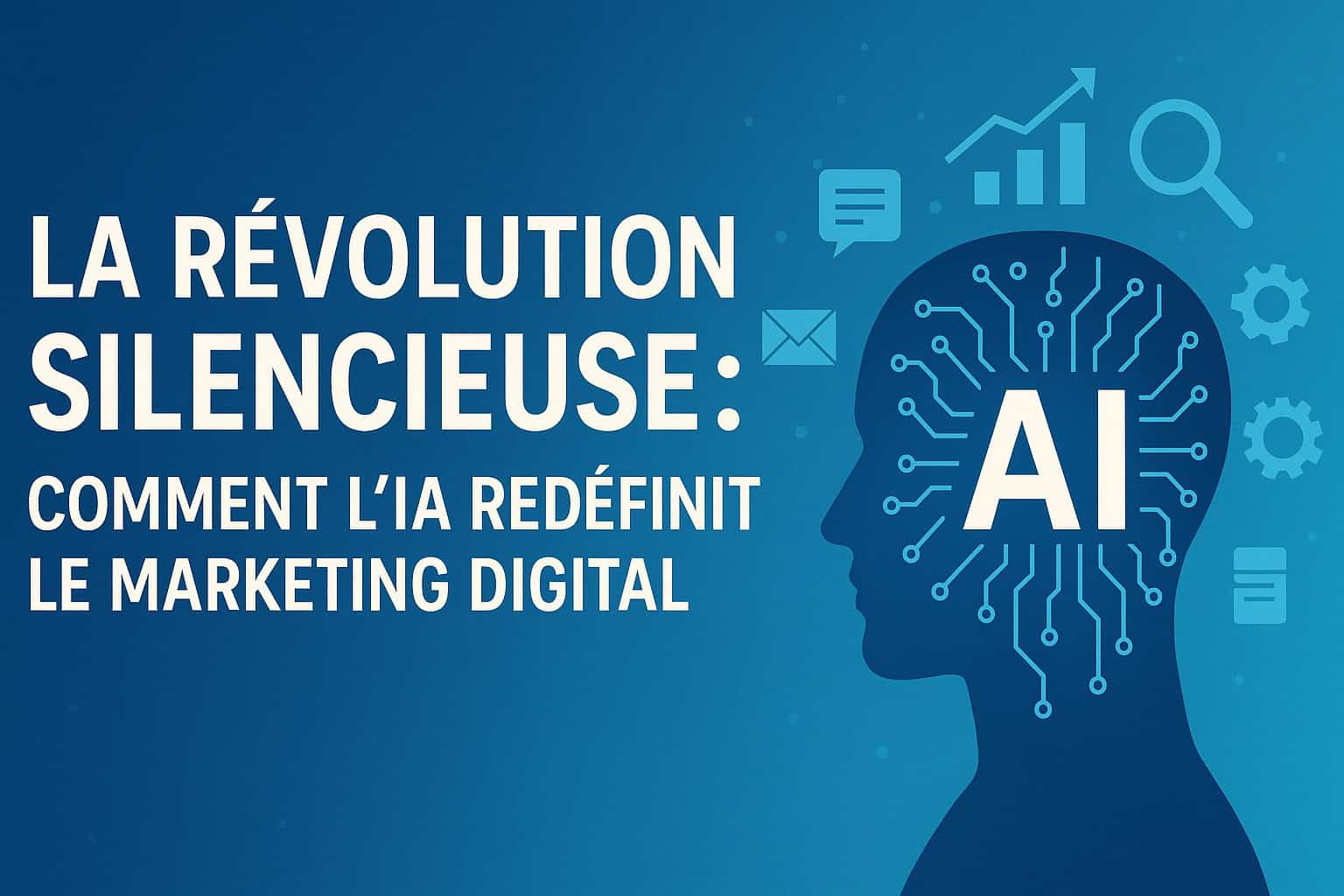
Digital marketing is constantly evolving, but few forces have transformed it with the scale and speed of artificial intelligence (AI). AI is no longer a futuristic technology; it is the silent engine that optimizes, personalizes, and automates marketing strategies on an unprecedented scale. Its dominance is no longer in question, and its impact will only grow, redefining the rules of the game for businesses of all sizes.
Personalization at Scale: The Holy Grail of Marketing
One of AI’s most significant contributions is its ability to enable hyper-targeted personalization. Mass marketing is a thing of the past; AI analyzes enormous volumes of data—purchase history, browsing behavior, social media interactions, demographic data—to create detailed customer profiles. This deep understanding allows brands to offer tailor-made experiences.
Concrete Example: Think of streaming platforms like Netflix or Spotify. Their AI-based recommendation systems analyze your preferences to suggest movies, series, or music tracks you are likely to enjoy. In e-commerce, retailers like Amazon use AI to personalize product pages, offers, and even emails, leading to significantly higher conversion rates. Studies show that companies excelling at personalization generate 40% more revenue than those that do not.
Optimizing Advertising Campaigns: Less Waste, More Results
AI has revolutionized media buying and optimization. Algorithms can now determine the best times to run ads, the most effective platforms, and the most receptive audiences. Programmatic advertising is a perfect example: AI automates the purchase of ad space in real-time based on specific criteria, ensuring that ads reach the right person at the right time and in the right place.
Concrete Example: Google Ads and Facebook Ads integrate sophisticated AI that automatically adjusts bids and targeting to maximize ROI. A Statista report indicates that spending on programmatic advertising is expected to reach $136 billion by 2024, highlighting the massive adoption of this AI-driven approach. AI also enables click fraud detection, thus protecting advertisers’ marketing budgets.
Content and SEO: When Machines Help Create and Rank
Content creation and search engine optimization (SEO) are areas where AI is beginning to play a major role. AI-based tools can help generate topic ideas, optimize titles and meta descriptions, and even write drafts of articles or product descriptions. For SEO, AI analyzes search trends, keyword performance, and user behavior to refine strategies.
Concrete Example: Tools like Jasper.ai or Copy.ai use generative AI to produce marketing copy. While they do not yet replace human expertise, they are excellent assistants for accelerating production. In SEO, platforms like SEMrush or Moz integrate AI features for competitive analysis and keyword research, enabling marketers to make more informed decisions.
AI-Augmented Customer Experience: Chatbots and Predictive Analytics
AI drastically improves the customer experience, a crucial differentiating factor. AI-powered chatbots are increasingly sophisticated, capable of understanding natural language, answering complex questions, and solving problems, offering 24/7 support. Beyond chatbots, AI enables predictive analytics to anticipate customer needs and even predict churn.
Concrete Example: Many telecommunications or financial services companies use chatbots to handle first-level customer queries, freeing up human agents for more complex tasks. It is estimated that 80% of customer service interactions will be handled by AI by 2026. Predictive analytics, meanwhile, helps companies identify at-risk customers and implement proactive retention strategies.
Predictions: Towards a Hyper-Intuitive and Ethical Marketing
The future of digital marketing is inseparable from AI. Here are a few key predictions: In conclusion, AI is not just a passing trend; it has become the backbone of modern digital marketing. By harnessing its power for personalization, campaign optimization, content creation, and customer experience enhancement, companies can not only stay competitive but also forge more meaningful and profitable relationships with their audiences. The era of hyper-intelligent marketing is already here, and it is just beginning.